At UniteLand Packaging, we supply high‑performance air pillow films, matching air cushion machine hardware and hands-on packaging consulting for e-commerce brands, 3PL fulfilment centres and wholesale merchants worldwide. Flat-rolled air pillows save massive warehouse footprint, reduce dimensional-weight charges and streamline high-volume packing lines — but they are not one-size-fix-all solution. This article walks you through exactly what air pillows excel at, where you should pick alternative materials, key film specifications, common failure troubleshooting and real‑world operational advice drawn directly from our client packing‑floor pain points.
What air pillows do well
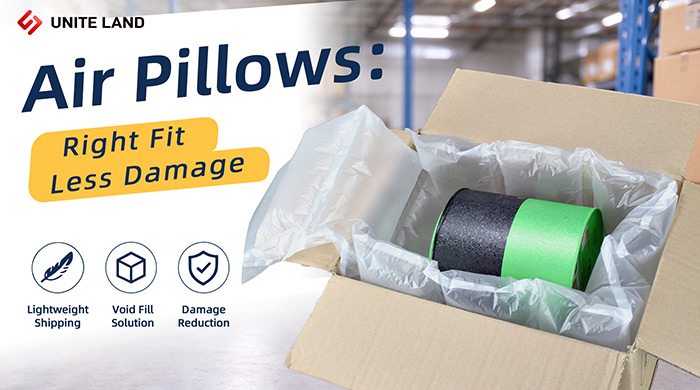
Air pillows are lightweight on-demand void-fill materials built primarily from HDPE film. Stored completely flat on rolls before inflation, they occupy merely a fraction of storage space compared to bubble rolls, foam inserts or kraft paper, which brings tangible warehouse‑space savings for busy fulfilment floors facing peak-season inventory pressure.
Once inflated, independent pillow chambers fill carton void gaps, block product shifting and mitigate low-to-moderate parcel drops and vibration. Since they add negligible physical weight to parcels, they help businesses keep dimensional-weight surcharges under control versus heavier paper or foam fillers. They produce no dust, debris or messy residue, delivering clean unboxing moments for end-consumers and simplifying reverse-logistics return-processing workflows.
They shine for medium-velocity parcels where your goods already sit inside solid primary retail packaging. Typical fit scenarios include cosmetics sets, boxed small-consumer electronics, apparel accessories, kitted merchandise and general hard-goods orders, where your core objective is stopping rattling and surface scuffing instead of absorbing high-magnitude heavy-impact shocks. They integrate seamlessly with desktop or high-speed air cushion machine.
UniteLand also offers customized anti-static air pillows for static-sensitive items, and PLA biodegradable-grade air pillow films for brands targeting sustainability compliance across EU and global markets.
When You Should Choose a Different Void Fill
Here is where many pack teams get tripped up. Air pillows are excellent for void fill, but they are not structural cushioning. If you are using air pillows to stop a heavy item from shifting laterally across the box, you are setting yourself up for failure.
Consider these alternatives when air pillows fall short:
- Heavy or High-Density Items: If you are shipping engine parts, glass bottles, or dense electronics, air pillows will simply compress under the weight. In these cases, 3D honeycomb paper sleeves, and specially customized reinforced and thickened air column bag provide the rigid structural support needed to prevent movement.
- Extreme Temperature Sensitivity:Standard HDPE air pillows can lose internal pressure in freezing temperatures or expand/burst in high heat. If your supply chain involves unheated winter trucks or hot warehouse docks, paper cushioning or temperature-stable foams may be safer.
- Premium Unboxing Experiences:If your brand identity relies on a tactile, eco-luxury feel, honeycomb paperinserts often resonate better with consumers than plastic air pillows.
- Sharp-Edged Products:While co-extruded films help, extremely sharp metal edges can still puncture standard air pillows. Custom corrugated wraps or edge protectors are often a better first line of defense.
What to Actually Look For in an Air Pillow System
Does the supplier own the whole system? The hidden friction in air pillow adoption is fragmentation: film from one vendor, machine from another, service from a third. UniteLand operates as a factory-direct, vertically integrated manufacturer—from raw material R&D to finished product—so film formulation, machine design, and application support sit under one roof.
Final thoughts from UniteLand Packaging
Air pillows are an extremely powerful void-fill workhorse — but they solve specific problems, not every packaging challenge. Their greatest strengths are low storage footprint, fast on–demand inflation and lightweight void blocking for correctly-packaged merchandise. Their biggest risk comes when businesses treat them as universal protection for every SKU without checking film thickness, inflation parameters and product-fit constraints.
Getting air pillow packaging right is not just buying rolls of film. If you are wrestling with recurring transit-damage headaches or unsure which film grade and inflator combination suits your order mix, reach out to our UniteLand packaging engineers. We can walk through sample testing and help you balance damage-reduction targets, operational throughput and total landed packaging costs.
What is your most stubborn void-fill or transit-damage challenge on your packing floor? Drop us a note, and let’s work through it together.