If you’re in the live fish business, you already know that packaging isn’t just a “box and go” step. It’s the difference between a thriving delivery and a refund request. At UniteLand Packaging, we’ve spent years to solve exactly this problem. Here’s what we’ve learned about using live fish transport bags properly—and how the right bag changes everything.
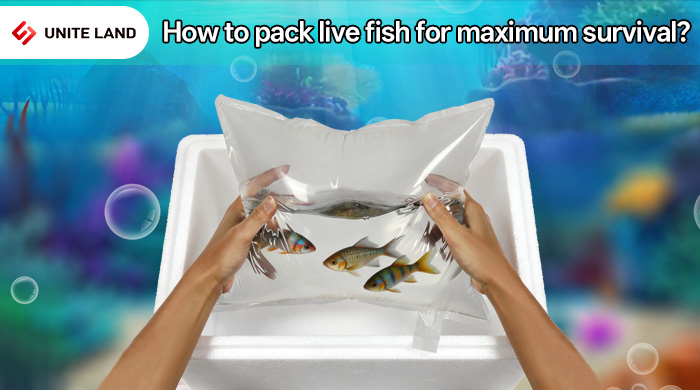
The 1/3 Rule: Water vs. Oxygen Ratio
Here’s a simple fix that instantly boosts survival rates: water should only fill one-third of the bag. The remaining two-thirds must be pure oxygen.
Why? Because water holds dissolved oxygen, but not enough for long-haul transport. The empty space above the water is your fish’s actual lifeline. More oxygen headspace = more hours of survival. It’s not rocket science, but you’d be shocked how many shippers get this backwards.
Quick tip: Use a high-quality oxygen source, not just ambient air. Ambient air contains only about 21% oxygen. Pure oxygen extends survival longer, depending on fish density and temperature.
Why Your Bag Material Matters More Than You Think
You’ve probably dealt with this nightmare: a bag arrives punctured, seam burst, or slowly leaking. Water leaks out. Oxygen leaks out. And your reputation leaks away with them.
This is where UniteLand live fish bags make a measurable difference. We use multi-layer nylon film—not the thin, single-layer plastic you’ll find in generic options.
What does that mean in real terms?
Puncture resistance: Nylon adds toughness and flexibility. Together, they handle rough courier handling without tearing.
Almost zero leakage: Our heat-sealed seams and one-way air valve prevent the slow seepage that kills fish overnight.
Temperature & Density: The Silent Killers
Oxygen and bag quality solve the big problems, but two subtle factors still trip people up:
- Fish density. Cramming too many fish into one bag creates competition for oxygen and spikes ammonia levels. As a rule, give each fish enough water volume to swim slightly without touching the bag walls. For larger species, individual bags are worth the extra cost.
- Temperature control. Fish metabolism—and oxygen consumption—doubles with every 10°C rise. In summer, use insulated liners or cold packs. In winter, avoid exposing bags to freezing cargo holds. The right bag material helps, but it’s not a substitute for temperature common sense.
Box them with buffer
Even the mightiest bag needs a good home inside the shipping box. Use insulated foam liners to maintain temperature, but don’t stop there. Fill voids with crumpled paper or air pillows so bags don’t tumble. Remember, the UniteLand live fish transport bag protects against internal jostling and minor impacts, but it needs a snug outer box to do its job perfectly. And always include a heat or cold pack separated by a layer of newspaper — direct contact can cause thermal burns or freeze spots.
What’s your biggest shipping headache right now? Leaking bags? Oxygen depletion? Courier damage? Drop us a message—we’ve probably solved it before, and we’re happy to share specifics.
At UniteLand Packaging, we believe live fish shipping shouldn’t feel like a gamble. With the right bag, the right oxygen ratio, and the right seal, your fish arrive alive. Every single time.